Iron Lung
📖 About the Game
What Is Iron Lung?
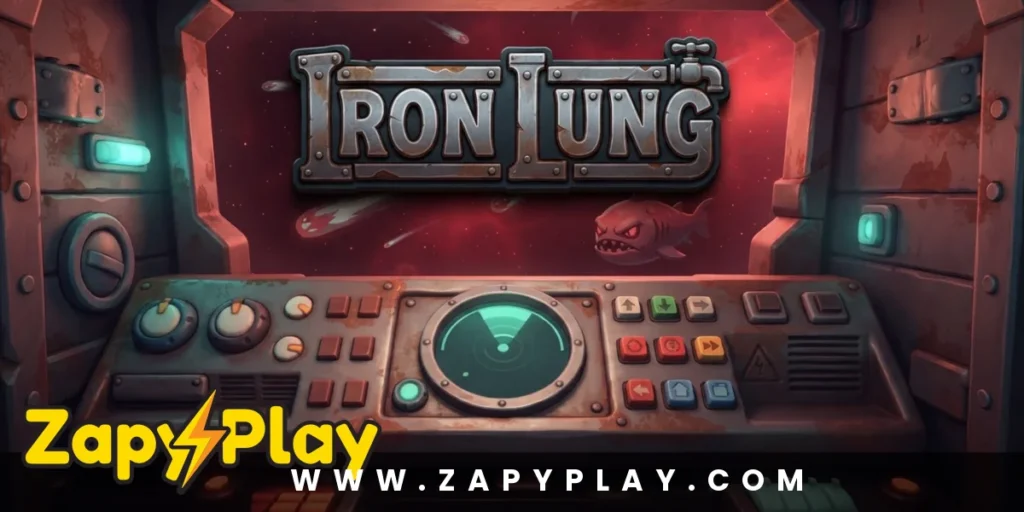
Iron Lung is a claustrophobic survival horror arcade game that places you inside a cramped submarine exploring the blood-red ocean of an alien moon. Unlike typical arcade titles that emphasize speed and reflexes, this game builds tension through limited visibility and atmospheric dread. The game originated as an indie horror experience that gained massive popularity through streaming communities, eventually finding its way to browser platforms where it continues to terrify players with its unique blend of survival horror mechanics and arcade-style navigation challenges.
Your primary objective involves piloting a makeshift submarine through an ocean of blood while photographing specific coordinates. The twist? Your vessel has no windows. You navigate entirely through a grainy monitor displaying static images captured by an external camera, alongside rudimentary sonar readings and coordinate displays that flicker ominously as you descend deeper into the crimson abyss.
Why You’ll Love Playing Iron Lung Online
Top Benefits of Playing Online
The browser-based version of Iron Lung eliminates installation barriers while preserving the game’s spine-chilling atmosphere. You can jump straight into the terror without downloads, making it perfect for quick horror sessions during breaks. The online format supports cross-platform compatibility, meaning you can experience the dread on any device with a modern web browser.
Free-to-play accessibility means anyone curious about horror gaming can test their nerves without financial commitment. The unblocked nature of browser versions makes this title available even in restricted network environments, though we recommend playing with headphones in a quiet space to fully appreciate the sound design. Cloud-based saves in many browser implementations let you pause your expedition and return later without losing progress through the blood ocean’s mapped coordinates.
Game Features
Key Features & Mechanics
- Single-player horror experience designed for solo exploration where isolation amplifies the psychological tension as you photograph mysterious coordinates in complete visual darkness between camera snapshots.
- Windowless navigation system that forces players to move blindly between photograph attempts, relying solely on coordinate readouts and proximity warnings that create genuine disorientation and vulnerability.
- Atmospheric audio design utilizing creaking metal, distant thuds, and unidentifiable sounds that build dread more effectively than visual scares, with every noise suggesting something lurking just outside your hull.
- Quick session lengths averaging 30-45 minutes for complete playthroughs, though first-time players often take longer as they acclimate to the unique control scheme and navigation challenges.
- Browser compatibility powered by modern HTML5 technology ensuring smooth performance across Windows, Mac, Chromebook, and Linux systems without platform-specific installations or compatibility issues.
- Minimalist interface that paradoxically increases immersion by stripping away unnecessary UI elements, leaving only essential gauges and the haunting photograph display that serves as your sole window to the outside world.
How Iron Lung Compares to Similar Arcade Games
Genre Comparisons & Differences
While traditional arcade games like Slow Roads emphasize relaxation and open visibility, Iron Lung inverts these expectations by weaponizing claustrophobia and limited information. Where classic submarine games show exterior views or sonar maps with clear enemy positions, this title deliberately withholds visual feedback to amplify helplessness. The photography mechanic distinguishes it from standard navigation challenges by forcing you to stop completely, take a picture, and wait anxiously as the image develops—moments when you’re most vulnerable to whatever might be approaching.
Compared to other horror arcade experiences, Iron Lung eschews jump scares in favor of mounting dread. The game never confirms whether threats are real or imagined, leaving your mind to fill the gaps between creaking sounds and unexplained sonar blips. This psychological approach creates longer-lasting tension than games relying on scripted fright moments, as every movement through the blood ocean becomes a calculated risk weighted against your dwindling oxygen and mounting paranoia about what the next photograph might reveal.
Game Modes
Campaign Mode
The core campaign tasks you with photographing specific coordinates delivered through terse text transmissions from a distant command station. Each coordinate represents a location of interest in the blood ocean, though the nature of your mission remains deliberately vague. Success requires methodical navigation, careful oxygen management, and steady nerves as you photograph each site and transmit the images back to command.
The campaign’s brilliance lies in its escalating environmental storytelling through the photographs themselves. Early images show empty crimson waters, but subsequent snapshots reveal increasingly disturbing details that suggest you’re not alone. The mode typically takes 30-60 minutes depending on navigation efficiency, with expert players completing runs faster by memorizing optimal routes between coordinates.
Free Exploration Mode
Some browser implementations include a practice mode allowing unrestricted movement through the blood ocean without mission objectives. This mode serves as a training ground for mastering the unique control scheme and understanding how depth, speed, and direction affect your blind navigation. Without the pressure of specific coordinates, you can experiment with the submarine’s handling characteristics and learn to interpret the cryptic sonar readings that become crucial for survival in campaign mode.
Free exploration removes oxygen constraints, letting you focus purely on spatial awareness and navigation skill development. Players often use this mode to test theories about environmental hazards and determine safe depth ranges before attempting campaign runs, though the mode sacrifices narrative context and the tension that makes the full experience memorable.
Tips & Tricks to Win at Iron Lung
Proven Strategies & Pro Tips
- Move in small increments between photographs rather than making long blind runs across the map. Frequent position checks prevent overshooting coordinates and reduce the risk of collision with unseen obstacles. For example, advance 50 units, photograph your position to verify trajectory, then continue rather than attempting 200-unit sprints that often end in disorienting spatial confusion.
- Memorize the relationship between coordinate changes and directional inputs during your first few attempts. The control scheme feels counterintuitive initially, but understanding how each movement command translates to coordinate shifts eliminates navigation guesswork. After three or four runs, muscle memory develops and you’ll navigate with confidence even without visual reference points.
- Listen intently to audio cues using quality headphones, as sound provides your only real-time environmental feedback. Specific creaking patterns indicate structural stress from depth pressure, while irregular thuds suggest external contact with unknown entities. When you hear rhythmic tapping that doesn’t match your movement inputs, stop immediately and reassess your position before proceeding.
- Photograph slightly before reaching exact coordinates to account for momentum that carries your submarine forward after input cessation. The vessel lacks precise braking, so arriving at coordinates with residual velocity causes overshoot errors requiring time-consuming backtracking. Experienced players stop 10-15 units short, drift to the target, then capture the image with minimal position correction needed.
- Manage oxygen conservatively by planning efficient routes between photo locations rather than wandering aimlessly. Plot a mental course connecting coordinates in logical sequence rather than ping-ponging across the map randomly. A well-planned route might complete the mission with 30% oxygen remaining, while chaotic navigation leaves you gasping and desperate in the final moments before mission completion.
Who Is Iron Lung For?
Target Audience & Player Fit
Iron Lung appeals primarily to horror enthusiasts who appreciate psychological tension over visceral gore. The game rewards patience and methodical thinking rather than quick reflexes, making it accessible to players who struggle with twitch-based arcade mechanics. Its short session length suits both quick gaming breaks and focused horror experiences, though the intense atmosphere makes marathon sessions emotionally exhausting.
The title works exceptionally well for mature players comfortable with ambiguity and implied threats. Younger audiences may find the minimalist presentation boring without understanding the deliberate design choices that make every creaking sound significant. Streamers and content creators particularly enjoy this game because audience reactions amplify the experience, turning solo dread into shared tension as viewers anticipate what each photograph might reveal in the blood-soaked waters.
Why Iron Lung Is One of the Best Free Online Games to Play
Final Verdict & Recommendation
Iron Lung stands out in the browser gaming landscape through its bold design philosophy that strips away conventional game comforts. The windowless submarine concept creates genuine vulnerability that few arcade titles attempt, transforming simple navigation into nerve-wracking expeditions where every decision carries weight. This design innovation elevates the experience beyond typical horror games that rely on predictable shock tactics.
Accessibility-wise, the browser version democratizes this indie horror gem by removing purchase barriers and platform limitations. Anyone with curiosity about innovative horror design can experience the game immediately without financial risk or installation hassles. The straightforward controls translate well to browser inputs, maintaining the developer’s original vision while expanding the potential audience exponentially.
The game’s replayability stems from speedrunning potential and the compulsion to master its unique navigation challenges. Community discussions around optimal routes, hidden details in photographs, and theories about the blood ocean’s nature keep players engaged long after initial completion. If you’re seeking a genuinely unsettling browser experience that respects your intelligence while challenging your nerves, pilot the submarine into the crimson depths and discover why this title has earned its reputation as one of horror gaming’s most effective experiments.
Frequently Asked Questions About Iron Lung
Is Iron Lung free to play in browser versions?
Yes, multiple browser implementations offer free access to Iron Lung gameplay, allowing you to experience the core horror submarine mechanics without payment. While the original commercial version includes additional polish and developer support, browser adaptations provide the essential experience of blind navigation through the blood ocean with all the psychological tension that makes the game memorable.
How do I control the submarine without being able to see outside?
You navigate using coordinate displays and directional inputs that move your vessel in cardinal directions. The interface shows your current position numerically, and you must mentally map these coordinates while moving blindly between photograph locations. Taking pictures pauses movement and reveals a static image of your surroundings, providing momentary visual confirmation before you return to blind navigation guided only by coordinate changes and audio cues.
Can I play Iron Lung on mobile devices or tablets?
Most browser versions support mobile play, though the experience works best on devices with physical keyboards for precise input control. Touchscreen implementations exist but may feel less responsive than keyboard-based controls, particularly during moments requiring quick directional changes. Tablets offer a good middle ground with larger screens for reading coordinates while maintaining portability, though headphone use remains essential for full atmospheric immersion regardless of device choice.
What makes the blood ocean setting significant to gameplay?
The blood ocean isn’t merely aesthetic—it represents complete opacity that justifies the submarine’s lack of windows and your total visual dependence on photographs. This narrative choice transforms what could feel like an arbitrary game limitation into a logical world-building element. The viscous, particle-filled nature of blood explains why external cameras produce grainy, unclear images rather than crystal-clear views, maintaining mystery and dread throughout your expedition.
How long does a typical playthrough take from start to finish?
First-time players usually complete Iron Lung in 45-60 minutes as they acclimate to blind navigation and decode the control scheme’s logic. Experienced players who’ve memorized coordinate locations and optimal routing can finish runs in 20-30 minutes, though speedrunning the game removes much of the atmospheric buildup that makes it effective. The relatively short duration encourages multiple attempts to improve navigation efficiency and discover details missed during initial panic-filled expeditions through the crimson depths.
You May Also Like
Check out these awesome games from our collection:
🎮 How to Play
Read Your Mission Coordinates
Begin by checking the transmission terminal for your first photograph coordinate. Write down or memorize the X, Y, and Z values you need to reach, as you'll navigate to these positions completely blind between camera uses.
Navigate Using Directional Controls
Use movement keys to adjust your position along each axis. Watch the coordinate display change as you move, calculating the distance remaining to your target. Move cautiously in short bursts rather than holding directions for extended periods to avoid overshooting.
Stop and Photograph the Location
Once your coordinates match the mission target, activate the camera to capture an image. The submarine stops completely during photography, and the image takes several seconds to develop and display on your monitor.
Transmit and Receive Next Coordinates
Send your photograph to command and wait for the next set of coordinates. Each new location builds on previous discoveries, taking you deeper into the blood ocean where sounds become stranger and your oxygen supply dwindles.
Monitor Oxygen and Audio Warnings
Keep constant awareness of your remaining oxygen supply and listen for unusual sounds that might indicate environmental hazards. Complete all photography objectives before oxygen depletion to successfully finish your mission and escape the crimson depths alive.
⌨️ Keyboard Controls
⚡ Pro Tips
- Always photograph your starting position first to establish a visual baseline before venturing into unknown coordinates, helping you recognize environmental changes as you progress deeper.
- Calculate the total distance to each coordinate before moving, breaking long journeys into smaller waypoints that you can verify with interim photographs to prevent getting hopelessly lost.
- Turn down movement sensitivity in browser settings if available, as slower submarine response gives you finer control during the precise positioning required for accurate coordinate photography.
- Pay attention to the time stamps on command transmissions, as the delays between your photographs and their responses create narrative context about your isolation and the mission's true nature.
- Complete your first playthrough without guides to experience the authentic dread of uncertainty, then replay with optimized routes to appreciate how much faster confident navigation becomes once you understand the blood ocean's geography.